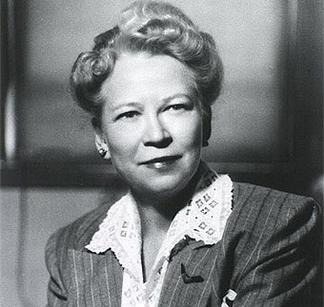
Edith Quimby (1891-1982) was an American medical physicist, best known as one of the co-founders of nuclear medicine, its diagnostics, therapeutic application and its safe practices.
1) Edith Quimby (née Hinkley) was born on July 10, 1891, in Rockford, Illinois. She was one of three children of Arthur S. Hinkley, a farmer and architect, and Harriet Hinkley.
2) She graduated from Whitman College in Washington with a bachelor’s degree in mathematics and physics in 1912. Soon after she started teaching high school in Nyssa, Oregon.
3) In 1914 she was awarded a fellowship to do her master’s degree studies at the University of California which she earned in 1916. During this time she married Shirley Leon Quimby (1915), who was also a physicist.
4) In 1919 she took a job at the Memorial Hospital for Cancer and Allied Diseases in New York City as assistant physicist to Gioacchino Failla. who was a pioneer in both biophysics and radiobiology, and had a significant role in pointing out the role of radiation as a cause of cancer and genetic mutation.
5) She became an associate physicist at the Memorial Hospital for Cancer and Allied Disease in 1932. This was very rare for a woman in her time. She worked on medical radiation and its effects.
6) In 1942, she left Memorial Hospital and joined the Center for Radiological Research at Columbia’s medical school. She became a full professor at Columbia University in 1954, and worked there until 1978.
7) Her research focused on safe doses of medicinal radiation. She also studied the potential of synthesized radioactive materials for treating cancer and in other medical research applications. In 1962 she released a paper titled “Late Radiation Effects in Roentgen Therapy for Hyperthyroidism”; she suggested ceasing all Roentgen therapy until we had a better idea of how this kind of treatment affected patients in the long term. Edith pioneered a need for simple computational to deliver safe and effective radiation treatment doses to patients. Until then, the dose had to be estimated with cumbersome algorithms for each individual patient due to lack of standards.
8) Edith also introduced a dose pre-planning system for brachytherapy, also known as the Memorial system, employing a spatially homogenous distribution of radioactive source strength over a plane/volume of targeted tissue to deliver non-uniform dose distributions with larger dose depositions at the center relative to the periphery of each targeted lesion. This system was much better and safer than the previous system where a source with high strength was concentrated at the lesions periphery to attain a relatively uniform dose distribution across each target.
9) She was the first woman to receive the Janeway Medal from the American Radium Society in 1940. In 1941 she received a Gold Medal of the Radiological Society of North America. She was elected president of the American Radium Society in 1954. The American Association of Physicists in Medicine established a lifetime achievement award in her honor. She was a devoted educator and co-organized “Clinical Use of Radioactive Isotopes” training course since 1954.
10) She died on October 11, 1982 in Manhattan, NYC at age 91.