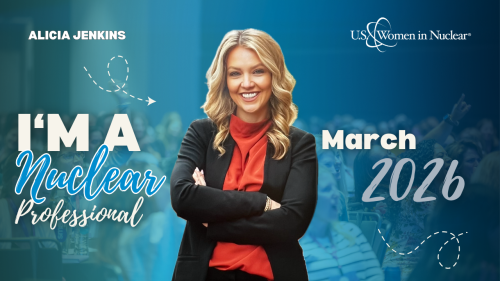
Alicia Jenkins, Plant Manager at Watts Bar Nuclear Plant, shares how lateral moves can drive growth.
Education/Certifications:
B.S. Professional Chemistry, University of North Alabama
MBA, University of Alabama
Senior Reactor Operator License
Employment:
Plant Manager, Watts Bar Nuclear Plant, TVA
Why did you choose the nuclear field or how did you end up in the nuclear field?
I didn’t choose nuclear, nuclear chose me! I was a pre‑med student majoring in professional chemistry, looking for a junior–senior year internship. I didn’t even realize there were three nuclear plants within driving distance. When my professor shared a list of opportunities, I thought I was applying to a local TVA lab until I was invited to interview at Browns Ferry Nuclear Plant. That interview changed my path.
I’ve been with TVA Nuclear ever since that internship, and I fell in love with nuclear power, especially the continuous improvement culture that gives you something new to learn and improve every day. As I learned how clean and reliable nuclear energy is, I knew I wanted to stay in this field, contribute to its excellence, and help others discover the same purpose.
What do you think is the most important benefit of nuclear science, technology, or energy and why?
When I first stepped into this field, I was amazed not only by how nuclear energy helps fight climate change through zero-carbon generation, but also by the culture that challenges you to make things better every single day. Nuclear technology doesn’t just power homes and businesses, it powers innovation and opportunity. Every improvement we make strengthens safety, reliability, and trust in an energy source that can support generations to come.
Is there something about your job that most people are surprised to hear?
Yes! Most people are surprised to learn that after more than 20 years working inside a nuclear plant, I’ve likely received more radiological dose from flying on airplanes than from my job. Commercial flights expose you to natural cosmic radiation at high altitudes, while inside the plant, strict controls and monitoring keep occupational exposure extremely low.
It’s a great example of how safe nuclear operations really are and how much effort goes into protecting workers and the public every single day. Hollywood doesn’t always portray nuclear in the best light, so it is important that we share how safe and reliable nuclear power is.
What advice do you have for women in the nuclear field?
My advice for women in the nuclear field is simple: be confident in your value and stay curious. This industry thrives on continuous improvement, and your perspective matters. Don’t hesitate to speak up, ask questions, and share ideas, even if you’re the only woman in the room. Regardless of your level in the organization, seek out mentors and networks like Women in Nuclear. They provide incredible opportunities for both personal and professional development, growth, and connection with others who’ve walked the same path. And remember, progress in nuclear isn’t just technical. It’s about building trust, collaboration, and resilience.
Finally, invest in yourself: learn the standards, understand the “why” behind procedures, and never stop growing. Every challenge is a chance to strengthen your skills and help shape the future.
What is your favorite work memory or accomplishment?
My favorite accomplishment was earning my Senior Reactor Operator (SRO) License. Several people saw potential in me early in my career, but the timing never felt right. At first, I was scared I couldn’t do it. Later, I was already a senior manager and wondered if stepping back for the license would hurt my career. Then life happened. I had two small kids, and before I knew it, ten years of my career had passed.
Finally, I took a leap of faith (and a step back professionally) to pursue the license, and it turned out to be the best decision I ever made for myself and my family. It gave me a deeper understanding of plant operations and strengthened my leadership. Honestly, I wish I had done it five years earlier.
What is your favorite aspect of U.S. WIN?
There are so many great aspects of WIN. Our commitment to spreading the word about the nuclear industry and recruiting talent are two that immediately come to mind. But my favorite part is the connection among members, which you discover when you take a moment to truly listen.
I had the opportunity to participate in the WIN NEXT program, and it was life changing. Up to that point in my career, I often felt alone and isolated. I was worried someone would be upset that I stayed home with a sick child, or anxious about how I’d be perceived for asking a question at a meeting. My inner critic was loud and relentless, keeping me up at night wondering if what I did that day was good enough.
NEXT helped me find real connections, embrace vulnerability, and most importantly, realize that so many other women in nuclear share those same feelings. Now, I make it a priority to create those connections with others. I take time to listen, to let people feel heard, and to remind them they’re not alone.
Are you a nuclear professional with a story to share? U.S. WIN wants to hear from you! Reach out to learn how you can be featured in our “I Am a Nuclear Professional” series.